Biological survey and monitoring data publishing guide

Published: Oct 15, 2025 by Steve Baskauf

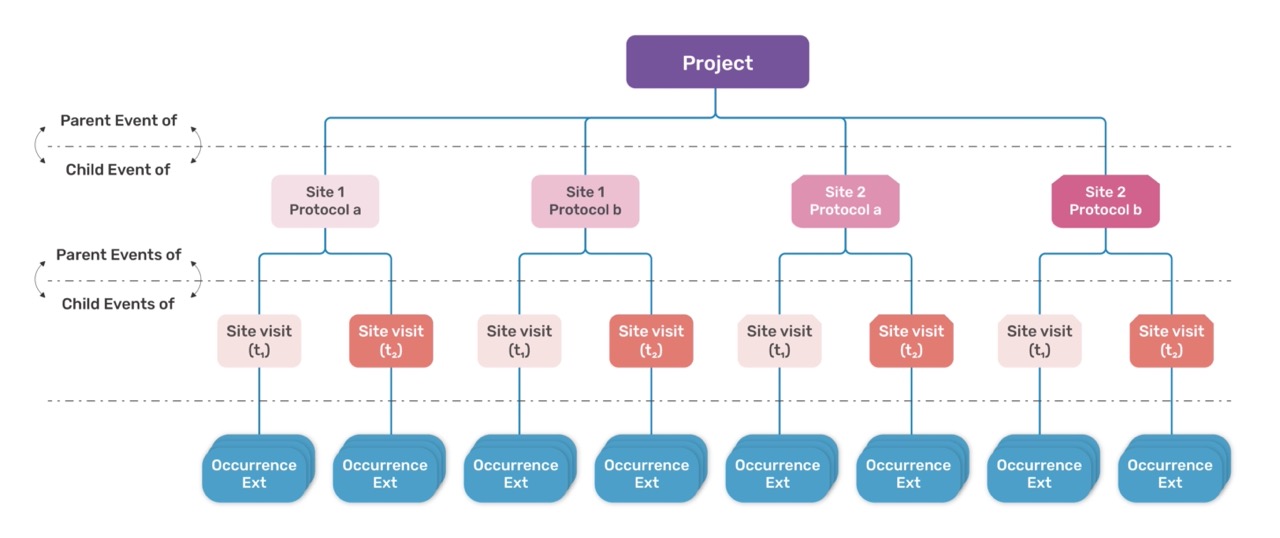
My coauthors and I have published a guide to help people understand how to use the new Humboldt Extension for Biological Inventories of the Darwin Core standard. The guide includes diagrams and detailed information about how to structure the data to capture the hierarchical structure typically found in monitoring projects.

The guide is freely available under a Creative Commons Attribution (CC BY) license as a web page and in PDF format at https://docs.gbif.org/guide-publishing-survey-data/en/

The full citation is:

Ingenloff K, Svenningsen C, Earl C, Shimabukuro PHF, Sica Y, Gan Y-M, Kachian ZR, Brenton P, Hochachka W, Wieczorek J, Stevenson R, Kazem A, Baskauf S, Zermoglio PF, Bloom D, Rodrigues A, Gamboa Martínez J & Schigel D. Guide for publishing biological survey and monitoring data to GBIF. GBIF Secretariat: Copenhagen. https://doi.org/10.35035/doc-ynvs-eh84
Share

Latest Posts

Darwin Core Data Packages

In May 2026, the Darwin Core standard for biodiversity data had its largest update since its original ratification in 2009.

Enabling ecological survey data integration

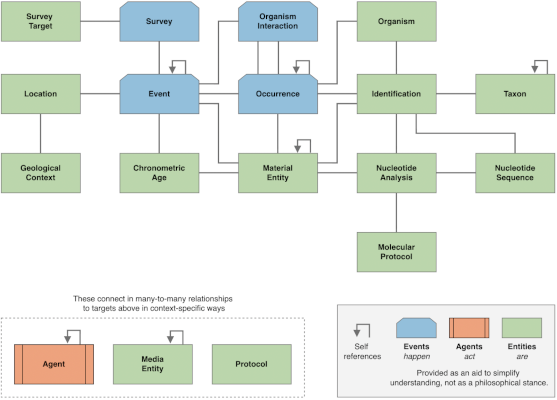
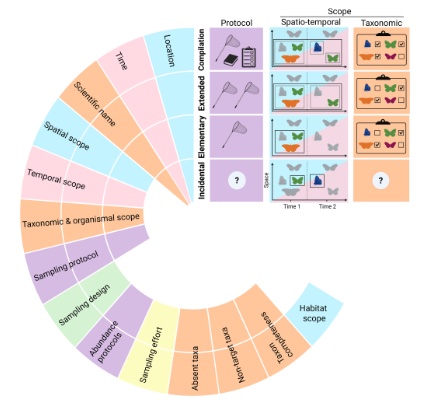
Our paper describing the Humboldt Extension to Darwin Core has been published in Ecography. The Humboldt Extension adds 55 terms that enrich the Darwin Core, providing the terms needed to capture and share multiple types of biodiversity survey data. The paper illustrates the benefits of implementing the Humboldt Extension with three case studies and demonstrates how richer data can be used in research, modelling, and to inform decision-making.

Biological survey and monitoring data publishing guide

My coauthors and I have published a guide to help people understand how to use the new Humboldt Extension for Biological Inventories of the Darwin Core standard. The guide includes diagrams and detailed information about how to structure the data to capture the hierarchical structure typically found in monitoring projects.